
Church Exterior Guide
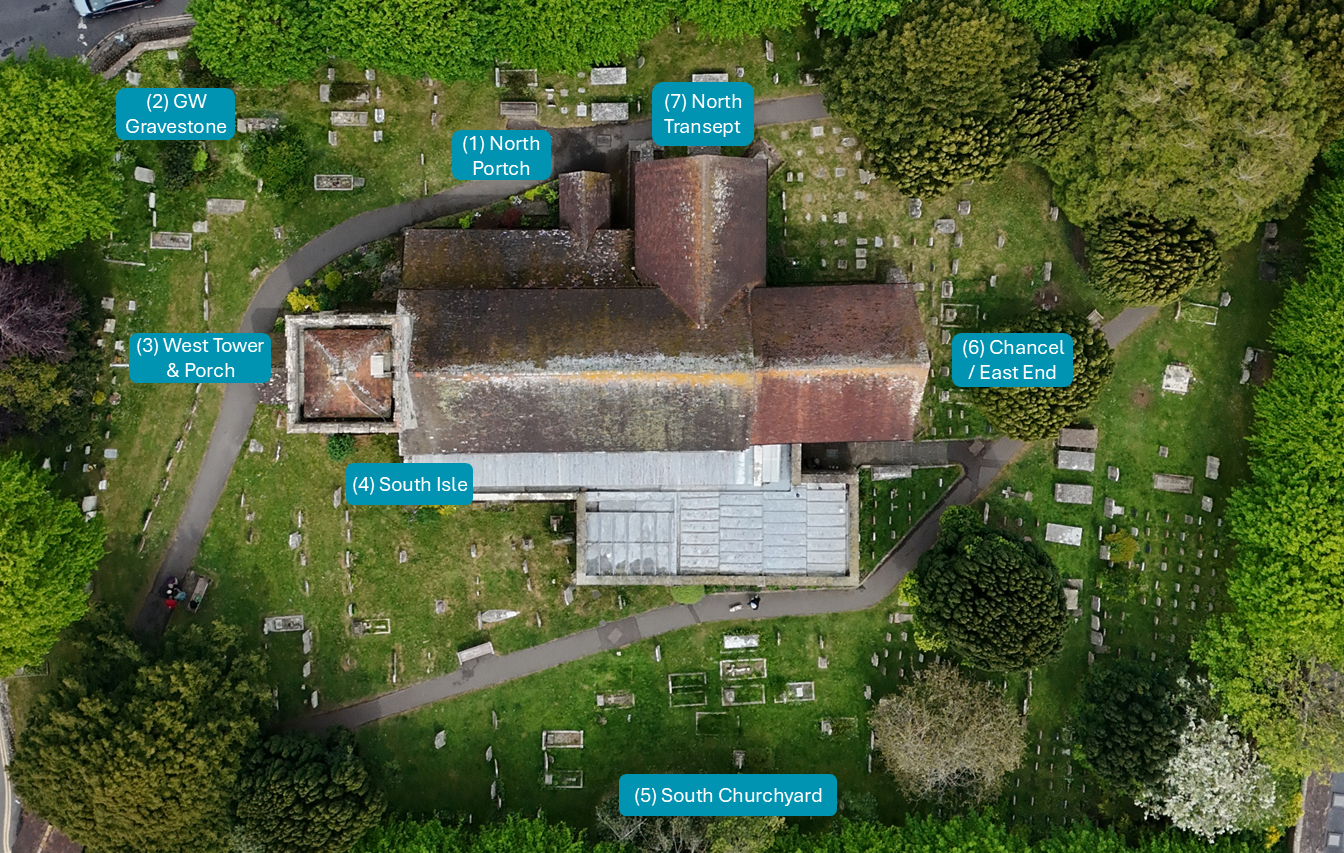
Above: CHURCH & ChurchYARD FROM OVERHEAD
-
(1) North Porch and North Aisle
Leaving the North Porch and turning left, look at ground level just beyond the porch. Here you will see a gravestone lying flat, marked with the initials E.S. This is the grave of Reverend Edmund Stansfield, vicar of the church from 1871 to 1907. He carved his own gravestone. (Further information about him can be found in the Rustington Church Interior guide.)
Looking at the exterior of the North Aisle, there is evidence that the original aisle was built in the 13th century. However, the outer wall visible today was largely rebuilt during the 1861 restoration. Low down, you can still see sections of the earlier wall, with more recent flintwork above.
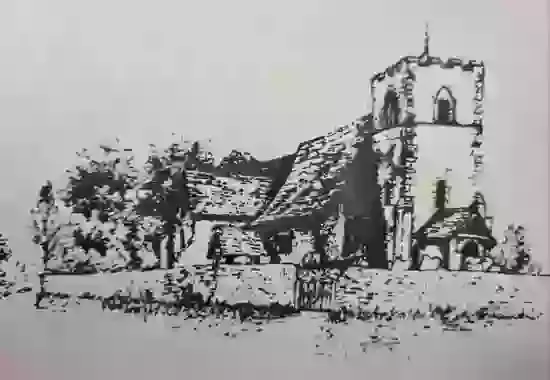
You will also notice that the aisle has a separate roof from the nave, a feature introduced during the 1860s restoration. Earlier drawings from 1791, 1804, and 1858 (pictured) show that the nave and aisles were once covered by a single continuous roof.
In the same image, note the gate on the corner of the churchyard. One of the original churchyard paths led directly to this gate, which remained in use until the early 1950s.
High above, the single-light quatrefoil (four-lobed) windows in the nave are believed to date from the Victorian restoration. Also visible is the bright splash of colour from the one-handed clock face on the north side of the tower.
(1) North Porch and North Aisle
Leaving the North Porch and turning left, look at ground level just beyond the porch. Here you will see a gravestone lying flat, marked with the initials E.S. This is the grave of Reverend Edmund Stansfield, vicar of the church from 1871 to 1907. He carved his own gravestone. (Further information about him can be found in the Rustington Church Interior guide.)
Looking at the exterior of the North Aisle, there is evidence that the original aisle was built in the 13th century. However, the outer wall visible today was largely rebuilt during the 1861 restoration. Low down, you can still see sections of the earlier wall, with more recent flintwork above.
You will also notice that the aisle has a separate roof from the nave, a feature introduced during the 1860s restoration. Earlier drawings from 1791, 1804, and 1858 (pictured) show that the nave and aisles were once covered by a single continuous roof.
In the same image, note the gate on the corner of the churchyard. One of the original churchyard paths led directly to this gate, which remained in use until the early 1950s.
High above, the single-light quatrefoil (four-lobed) windows in the nave are believed to date from the Victorian restoration. Also visible is the bright splash of colour from the one-handed clock face on the north side of the tower.
-
(2) North-West Churchyard
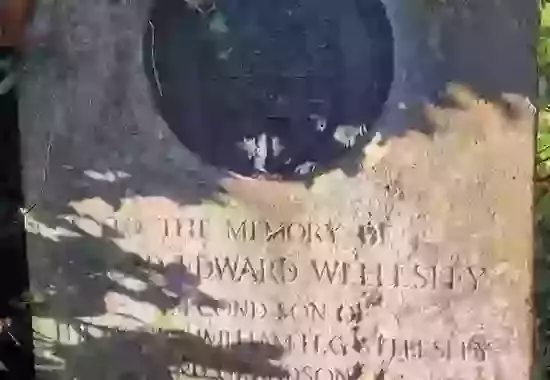
Before continuing around to the West Tower, look to the far north-west corner of the churchyard, near where the old gate once stood. Here is the gravestone of Gerald Edward Wellesley, nephew of the Duke of Wellington.
(2) North-West Churchyard
Before continuing around to the West Tower, look to the far north-west corner of the churchyard, near where the old gate once stood. Here is the gravestone of Gerald Edward Wellesley, nephew of the Duke of Wellington.
-
(3) West Tower and Porch
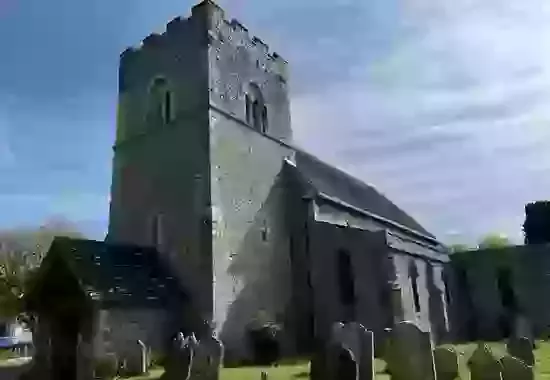
The most striking external feature of the church is the West Tower, built around 1170 in the late Norman or transitional style. Each face of the tower contains a small original round-headed Norman window, but the most impressive features are the belfry openings: a slightly pointed outer arch above two smaller round-headed arches. They have decorated shafts and scalloped capitals, many of which are now heavily worn.
The battlements at the top of the tower were added during the early years of the Stuart restoration in 1661. The date can be seen formed in red brick just below the battlements. This restoration largely concealed the earlier pyramid-shaped cap of the tower.
The West Porch dates from the 14th century and includes some ancient timbers, probably reused from the rebuilding of the nave roof in the 1860s. Other timbers from that roof were used to construct the Lych-gate in 1860, which was restored again in 1960.
(3) West Tower and Porch
The most striking external feature of the church is the West Tower, built around 1170 in the late Norman or transitional style. Each face of the tower contains a small original round-headed Norman window, but the most impressive features are the belfry openings: a slightly pointed outer arch above two smaller round-headed arches. They have decorated shafts and scalloped capitals, many of which are now heavily worn.
The battlements at the top of the tower were added during the early years of the Stuart restoration in 1661. The date can be seen formed in red brick just below the battlements. This restoration largely concealed the earlier pyramid-shaped cap of the tower.
The West Porch dates from the 14th century and includes some ancient timbers, probably reused from the rebuilding of the nave roof in the 1860s. Other timbers from that roof were used to construct the Lych-gate in 1860, which was restored again in 1960.
-
(4) South Aisle and Anchorite’s Cell
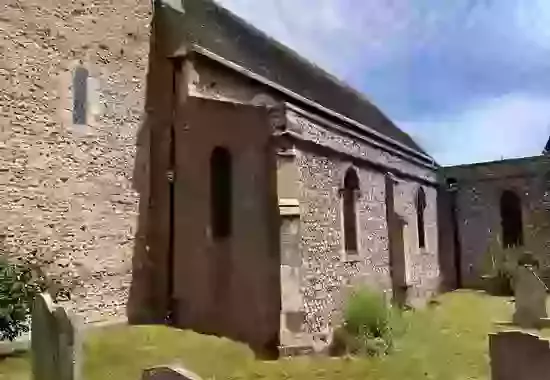
Moving around to the south side, the South Aisle was added in the 12th century (circa 1170). However, its outer wall and windows were completely rebuilt around 1850. As with the North Aisle, the South Aisle was once roofed in a continuous sweep from the nave roof. During the 1861 restoration, the aisles were given separate roofs. Note how the upper edge of the newer sloping roof slightly overlaps the bottoms of the nave’s quatrefoil windows. This suggests that the south-side quatrefoils may be older than those on the north side, whose stonework is entirely Victorian.
One of the most intriguing features associated with the church is the possible remains of an Anchorite’s cell. Anchorites flourished during the 12th and 13th centuries, living lives of prayer and seclusion. An unusual structure shown on the east end of the South Aisle in the 1791 drawing may represent this cell and could explain the presence of the low side window inside the chancel.
An Anchorite’s cell typically had three openings:
- one towards the altar,
- one through which food and drink were passed,
- and a third to admit light.
Known as “Ankers,” these holy men lived entirely within their cells, offering spiritual guidance and hearing confessions. Pilgrims travelling to the Holy Land would often seek their absolution, and even kings were known to confess their sins to Anchorites.
(4) South Aisle and Anchorite’s Cell
Moving around to the south side, the South Aisle was added in the 12th century (circa 1170). However, its outer wall and windows were completely rebuilt around 1850. As with the North Aisle, the South Aisle was once roofed in a continuous sweep from the nave roof. During the 1861 restoration, the aisles were given separate roofs. Note how the upper edge of the newer sloping roof slightly overlaps the bottoms of the nave’s quatrefoil windows. This suggests that the south-side quatrefoils may be older than those on the north side, whose stonework is entirely Victorian.
One of the most intriguing features associated with the church is the possible remains of an Anchorite’s cell. Anchorites flourished during the 12th and 13th centuries, living lives of prayer and seclusion. An unusual structure shown on the east end of the South Aisle in the 1791 drawing may represent this cell and could explain the presence of the low side window inside the chancel.
An Anchorite’s cell typically had three openings:
- one towards the altar,
- one through which food and drink were passed,
- and a third to admit light.
Known as “Ankers,” these holy men lived entirely within their cells, offering spiritual guidance and hearing confessions. Pilgrims travelling to the Holy Land would often seek their absolution, and even kings were known to confess their sins to Anchorites.
-
(5) South Churchyard
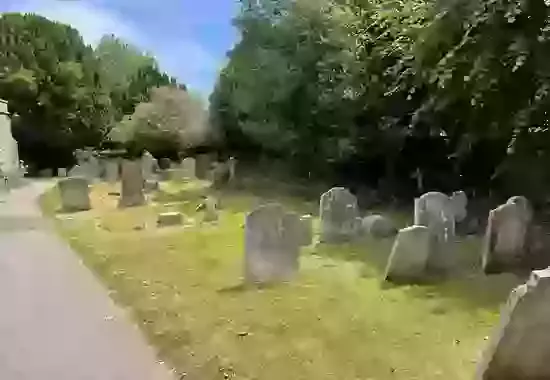
The chancel arch dates from the early 13th century. Immediately to its left is an opening containing stone steps, which once led to the rood loft.
When the chancel was rebuilt, a wooden screen separated it from the nave. Above this stood the rood beam, bearing carved and painted figures of Christ on the Cross, flanked by the Virgin Mary and St John. None of these figures survive anywhere in England, having been destroyed during the Reformation.
A later and more elaborate screen included a narrow gallery—the rood loft—used to tend candles placed on the beam. The lower part of this screen survived until it was removed during Victorian restoration in the 1860s. There were inscriptions of Exodus XX (The Ten Commandments) on the chancel arch wall until one of the restorations. In addition, mural paintings from the 12th/13th century were uncovered in 1882 in the church, depicting scenes like the Nativity and Passion but these can no longer be seen.
(5) South Churchyard
The chancel arch dates from the early 13th century. Immediately to its left is an opening containing stone steps, which once led to the rood loft.
When the chancel was rebuilt, a wooden screen separated it from the nave. Above this stood the rood beam, bearing carved and painted figures of Christ on the Cross, flanked by the Virgin Mary and St John. None of these figures survive anywhere in England, having been destroyed during the Reformation.
A later and more elaborate screen included a narrow gallery—the rood loft—used to tend candles placed on the beam. The lower part of this screen survived until it was removed during Victorian restoration in the 1860s. There were inscriptions of Exodus XX (The Ten Commandments) on the chancel arch wall until one of the restorations. In addition, mural paintings from the 12th/13th century were uncovered in 1882 in the church, depicting scenes like the Nativity and Passion but these can no longer be seen.
-
Rhoda Garett
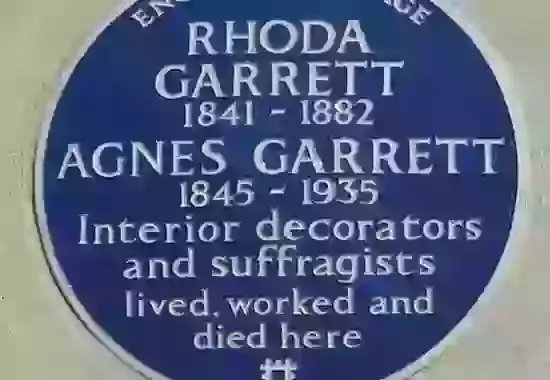
One notable Rustington resident was Rhoda Garrett, who died in Gower Street, London. A memorial to her was placed there in 2025, as shown in the picture.
Rhoda had asked to be buried in her favourite place, Rustington, and she was interred in the churchyard in 1882, close to the Chancel wall.
Sadly, the exact location of her grave is now unknown. It was removed sometime between 1908 and 1938, probably by the then Vicar, James Louis Crosland, or one of his supporters, due to her notoriety as a leading figure in the Women’s Suffrage Movement.
It is hoped that a memorial to Rhoda Garrett may be installed within the church at a later date.
Rhoda Garett
One notable Rustington resident was Rhoda Garrett, who died in Gower Street, London. A memorial to her was placed there in 2025, as shown in the picture.
Rhoda had asked to be buried in her favourite place, Rustington, and she was interred in the churchyard in 1882, close to the Chancel wall.
Sadly, the exact location of her grave is now unknown. It was removed sometime between 1908 and 1938, probably by the then Vicar, James Louis Crosland, or one of his supporters, due to her notoriety as a leading figure in the Women’s Suffrage Movement.
It is hoped that a memorial to Rhoda Garrett may be installed within the church at a later date.
-
(6) Chancel and East End
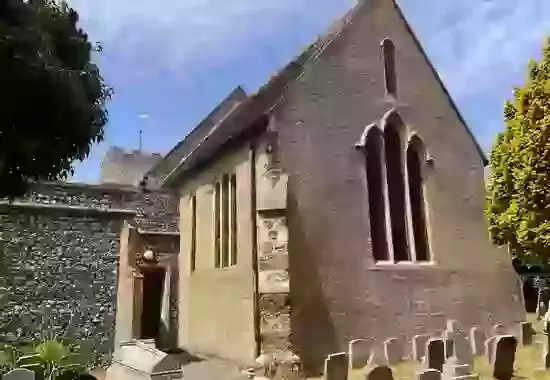
The present Chancel was built in the 13th century, replacing an earlier and shorter Norman chancel.
At the East end of the church, where the altar stands, you can see the present three-light East Window, dating from the 19th century but designed in a 13th-century style. It may be a rebuilding of the original window.
Continue along the path towards the other entrance to the churchyard before turning back towards the North Porch. On the right-hand side of the path, you may notice a grave marked with a skull and crossbones, a traditional symbol of death and mortality. Today, this imagery is more commonly associated with the “Jolly Roger,” and visitors—both children and adults—often ask whether it is a “pirate’s grave.”
(6) Chancel and East End
The present Chancel was built in the 13th century, replacing an earlier and shorter Norman chancel.
At the East end of the church, where the altar stands, you can see the present three-light East Window, dating from the 19th century but designed in a 13th-century style. It may be a rebuilding of the original window.
Continue along the path towards the other entrance to the churchyard before turning back towards the North Porch. On the right-hand side of the path, you may notice a grave marked with a skull and crossbones, a traditional symbol of death and mortality. Today, this imagery is more commonly associated with the “Jolly Roger,” and visitors—both children and adults—often ask whether it is a “pirate’s grave.”
-
(7) North Transept (Lady Chapel)
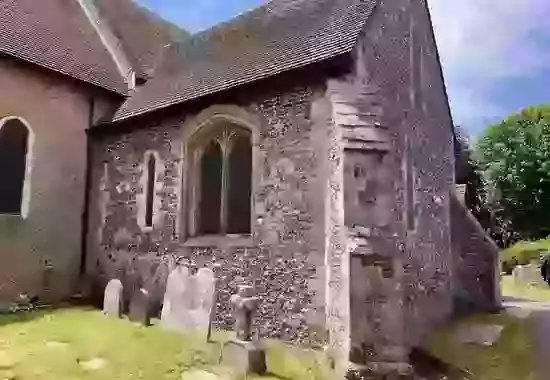
The North Transept, also known as the Lady Chapel, dates from the 13th century and is built in the Early English style. In the east wall is a particularly fine example of a narrow 13th-century lancet window. The north wall contains another lancet window, with a larger single light opening centrally placed above it.
(7) North Transept (Lady Chapel)
The North Transept, also known as the Lady Chapel, dates from the 13th century and is built in the Early English style. In the east wall is a particularly fine example of a narrow 13th-century lancet window. The north wall contains another lancet window, with a larger single light opening centrally placed above it.