
Church Interior Guide
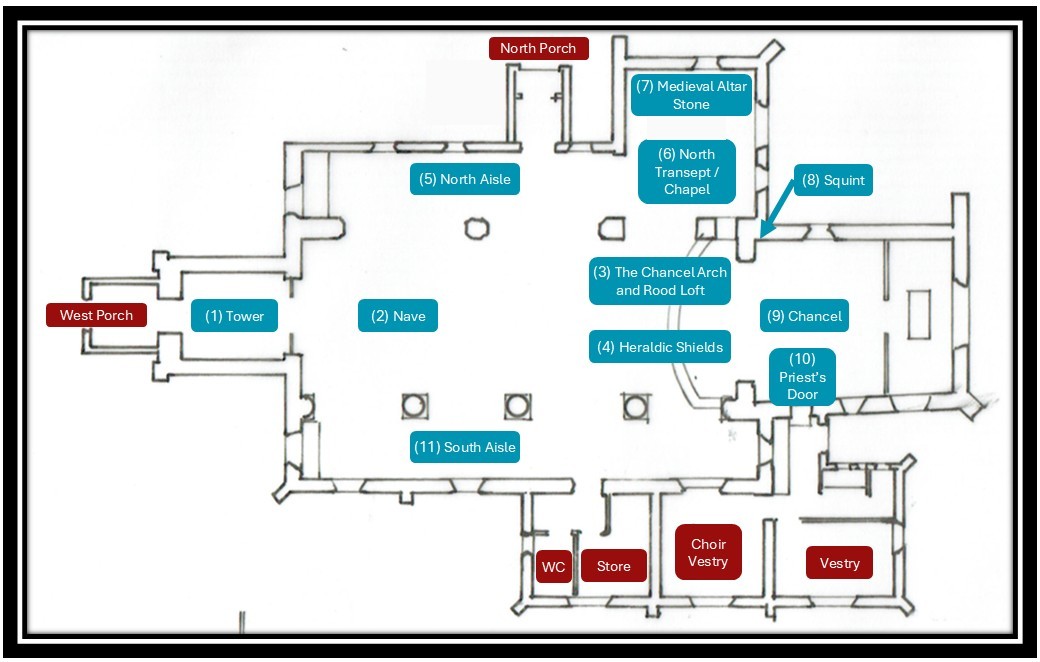
Above: Church Layout
One of the first questions visitors ask on entering a church is, “How old is it?”
This seems straightforward, but the answer is surprisingly complex. The situation is similar to the Ship of Theseus paradox, which asks whether an object remains the same if all its parts are gradually replaced. A more familiar illustration is Trigger’s broom from Only Fools and Horses: although he had replaced the head 17 times and the handle 14 times, Trigger still claimed it was the same broom.
In the case of St Peter and St Paul’s, parts of the present building date back over 900 years, to around 1100. It is believed that an even earlier Saxon church stood on the same site sometime between the late 7th and mid-10th centuries. That building would have been constructed of wattle and daub with a thatched roof, similar to the huts at the Singleton Open-Air Museum. No visible remains of this Saxon church survive today.
-
(1) The Tower
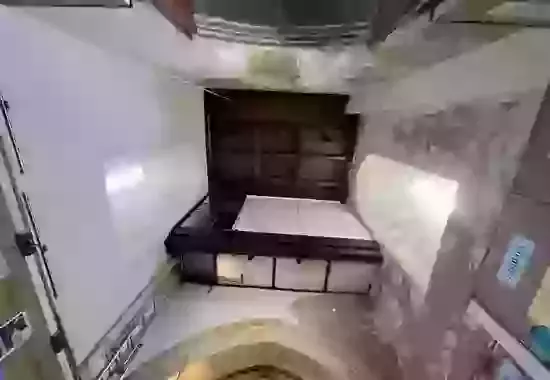
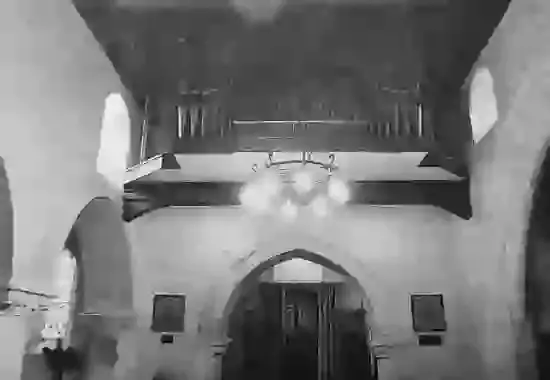
Entering through the west door brings you into the tower, where the oldest and newest features of the church meet.
- The tower arch, with its scalloped capitals, dates from about 1175.
- The glass doors were installed during the re-ordering completed after 2015.
A ladder gives access to the bell tower, which houses a one-handed clock and a single remaining bell dated 1671 (there were once three).
Originally, the nave roof was lower. As a result, the east bell opening is now only visible from inside the church, where it is hidden behind the organ.
(1) The Tower
Entering through the west door brings you into the tower, where the oldest and newest features of the church meet.
- The tower arch, with its scalloped capitals, dates from about 1175.
- The glass doors were installed during the re-ordering completed after 2015.
A ladder gives access to the bell tower, which houses a one-handed clock and a single remaining bell dated 1671 (there were once three).
Originally, the nave roof was lower. As a result, the east bell opening is now only visible from inside the church, where it is hidden behind the organ.
-
(2) The Nave
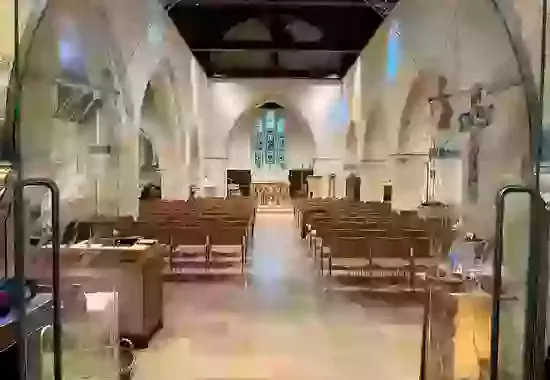
Passing through the glass doors, you enter the nave, which was rebuilt in the 13th century to replace a smaller Norman nave. From here you can see the “weeping chancel,” so called because it is not aligned with the nave but turns slightly—about five degrees—to the north.
Much of what you see reflects the 2015 re-ordering, including:
- Modern seating replacing Victorian pews
- A raised floor to accommodate underfloor heating
- Updated audiovisual equipment
- New chancel furniture
- Medieval stonework revealed by removing white paint
- An extended vestry providing storage and toilet facilities
The oldest visible masonry in the nave is found in the four corners, dating from the late 11th or early 12th century.
(2) The Nave
Passing through the glass doors, you enter the nave, which was rebuilt in the 13th century to replace a smaller Norman nave. From here you can see the “weeping chancel,” so called because it is not aligned with the nave but turns slightly—about five degrees—to the north.
Much of what you see reflects the 2015 re-ordering, including:
- Modern seating replacing Victorian pews
- A raised floor to accommodate underfloor heating
- Updated audiovisual equipment
- New chancel furniture
- Medieval stonework revealed by removing white paint
- An extended vestry providing storage and toilet facilities
The oldest visible masonry in the nave is found in the four corners, dating from the late 11th or early 12th century.
-
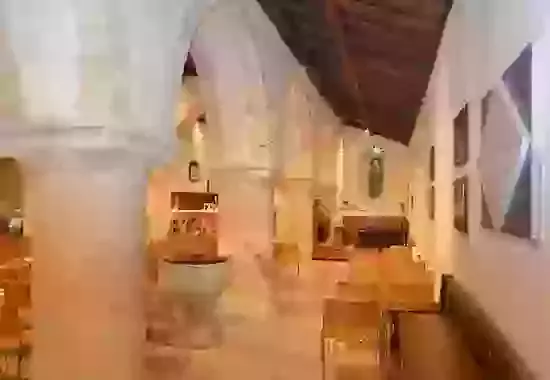
(11) The South Arcade
As the population grew, the church was enlarged. Around 1180, four arches were cut through the south wall to create what is now the South Aisle. These arches belong to the Transitional Norman period. They are slightly pointed and unchamfered, with alternating round and octagonal piers. All bases are square, and the responds are semi-octagonal.
The capitals are particularly interesting, as each differs in design, ranging from concave and convex scallops to carved leaves and corner volutes. However, they do not look like a master stonemason completed them. For example, the East respond has scallops started at each end and not meeting in the middle. The middle pier just has volutes in the corners but one is missing and the first pier west has crocketed leaves but only on two sides.
(11) The South Arcade
As the population grew, the church was enlarged. Around 1180, four arches were cut through the south wall to create what is now the South Aisle. These arches belong to the Transitional Norman period. They are slightly pointed and unchamfered, with alternating round and octagonal piers. All bases are square, and the responds are semi-octagonal.
The capitals are particularly interesting, as each differs in design, ranging from concave and convex scallops to carved leaves and corner volutes. However, they do not look like a master stonemason completed them. For example, the East respond has scallops started at each end and not meeting in the middle. The middle pier just has volutes in the corners but one is missing and the first pier west has crocketed leaves but only on two sides.
-
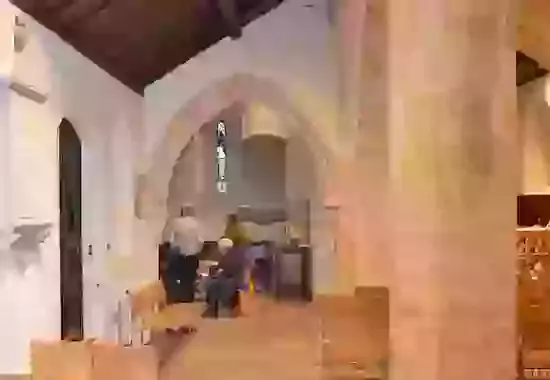
(5) The North Arcade
On the north side are two elegant-pointed arches dating from the early 14th century, in the Decorated style. These are unusual because they have no capitals; the arches appear to flow directly into the pillars.
In medieval times, the nave was an open space with no seating. Those who were weak or infirm sat against the cold walls, giving rise to the phrase “the weakest go to the wall.” Above, the clerestory windows consist of quatrefoils set within circles. Before the restorations of the 1850s, these were not visible from outside due to a continuous roof.
(5) The North Arcade
On the north side are two elegant-pointed arches dating from the early 14th century, in the Decorated style. These are unusual because they have no capitals; the arches appear to flow directly into the pillars.
In medieval times, the nave was an open space with no seating. Those who were weak or infirm sat against the cold walls, giving rise to the phrase “the weakest go to the wall.” Above, the clerestory windows consist of quatrefoils set within circles. Before the restorations of the 1850s, these were not visible from outside due to a continuous roof.
-
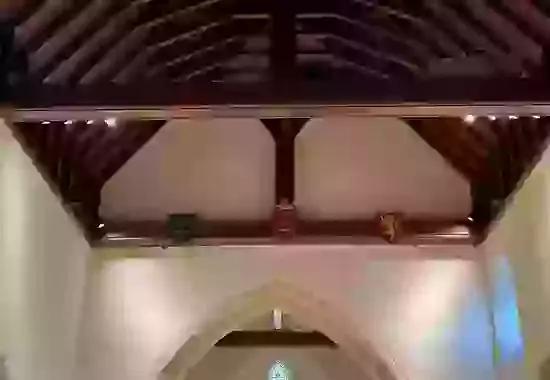
(3) The Chancel Arch & Rood Loft
The chancel arch dates from the early 13th century. Immediately to its left is an opening containing stone steps, which once led to the rood loft.
When the chancel was rebuilt, a wooden screen separated it from the nave. Above this stood the rood beam, bearing carved and painted figures of Christ on the Cross, flanked by the Virgin Mary and St John. None of these figures survive anywhere in England, having been destroyed during the Reformation.
A later and more elaborate screen included a narrow gallery—the rood loft—used to tend candles placed on the beam. The lower part of this screen survived until it was removed during Victorian restoration in the 1860s. There were inscriptions of Exodus XX (The Ten Commandments) on the chancel arch wall until one of the restorations. In addition, mural paintings from the 12th/13th century were uncovered in 1882 in the church, depicting scenes like the Nativity and Passion but these can no longer be seen.
(3) The Chancel Arch & Rood Loft
The chancel arch dates from the early 13th century. Immediately to its left is an opening containing stone steps, which once led to the rood loft.
When the chancel was rebuilt, a wooden screen separated it from the nave. Above this stood the rood beam, bearing carved and painted figures of Christ on the Cross, flanked by the Virgin Mary and St John. None of these figures survive anywhere in England, having been destroyed during the Reformation.
A later and more elaborate screen included a narrow gallery—the rood loft—used to tend candles placed on the beam. The lower part of this screen survived until it was removed during Victorian restoration in the 1860s. There were inscriptions of Exodus XX (The Ten Commandments) on the chancel arch wall until one of the restorations. In addition, mural paintings from the 12th/13th century were uncovered in 1882 in the church, depicting scenes like the Nativity and Passion but these can no longer be seen.
-
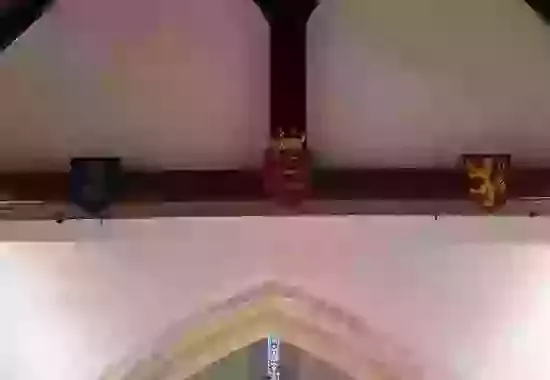
(4) The Heraldic Shields
High above the chancel arch are three heraldic shields:
- The arms of the Bishop of Chichester
- The arms of King Edward III, surmounted by a crown
- The lion rampant of Richard Fitzalan, Earl of Arundel
The third shield was recreated by Rev. Edmund Stansfield, who also contributed several carvings to the church.
Richard Fitzalan founded the College of the Holy Trinity, Arundel, in 1537, having first obtained the consent of the King and the approval of the Bishop for the appropriation of the Great Tithes of Rustington Parish Church to support the College, provided that adequate provision was made for the maintenance of the Vicar. As a result, the Rectory of Rustington became a vicarage, a status it has retained to the present day.
(4) The Heraldic Shields
High above the chancel arch are three heraldic shields:
- The arms of the Bishop of Chichester
- The arms of King Edward III, surmounted by a crown
- The lion rampant of Richard Fitzalan, Earl of Arundel
The third shield was recreated by Rev. Edmund Stansfield, who also contributed several carvings to the church.
Richard Fitzalan founded the College of the Holy Trinity, Arundel, in 1537, having first obtained the consent of the King and the approval of the Bishop for the appropriation of the Great Tithes of Rustington Parish Church to support the College, provided that adequate provision was made for the maintenance of the Vicar. As a result, the Rectory of Rustington became a vicarage, a status it has retained to the present day.
-
(5) The North Aisle
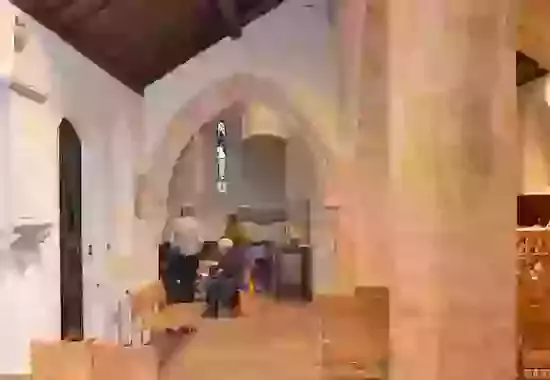
The north aisle dates mainly from the 14th century, although an earlier aisle existed here. Features include memorials to Richard Urlin and the Peters family, a war memorial, stained glass of St Peter and St Paul, and the former north entrance, once the main doorway. The arch leading into the chapel dates from around 1250 and includes carved stone heads whose identities are unknown.
(5) The North Aisle
The north aisle dates mainly from the 14th century, although an earlier aisle existed here. Features include memorials to Richard Urlin and the Peters family, a war memorial, stained glass of St Peter and St Paul, and the former north entrance, once the main doorway. The arch leading into the chapel dates from around 1250 and includes carved stone heads whose identities are unknown.
-
(6) The North Transept / Chapel
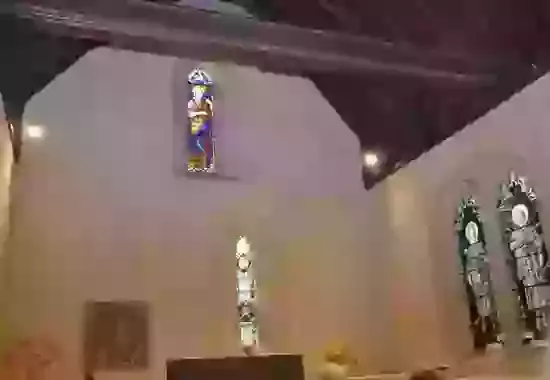
This chapel originated in the 13th century.
Originally, the east wall contained three narrow lancet windows; only one remains. A large double window was added in the 15th century. Its stained glass depicts St Edmund, shown both as King of East Anglia and as a martyr pierced with arrows. The window commemorates Rev. Edmund Stansfield, whose initials appear in the glass.
Two carved stones from the early 16th century are set into the north wall:
- A family memorial, possibly to Richard Covert, Lord of the Manor
- Part of an altar tomb belonging to Thomas Cooke and his wife Joan
Both were found reused as paving during 19th-century restoration.
(6) The North Transept / Chapel
This chapel originated in the 13th century.
Originally, the east wall contained three narrow lancet windows; only one remains. A large double window was added in the 15th century. Its stained glass depicts St Edmund, shown both as King of East Anglia and as a martyr pierced with arrows. The window commemorates Rev. Edmund Stansfield, whose initials appear in the glass.
Two carved stones from the early 16th century are set into the north wall:
- A family memorial, possibly to Richard Covert, Lord of the Manor
- Part of an altar tomb belonging to Thomas Cooke and his wife Joan
Both were found reused as paving during 19th-century restoration.
-
(7) The Medieval Altar Stone
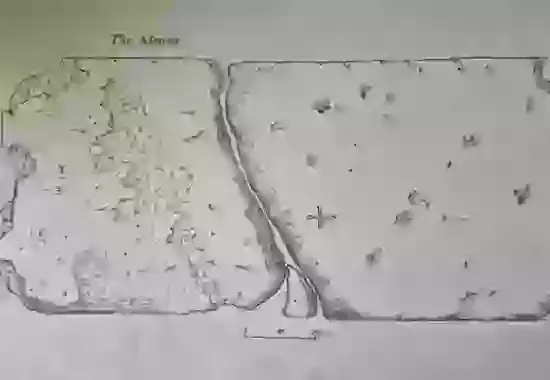
In 1993, fragments of a medieval altar slab (mensa) were discovered beneath the chapel floor. The stone bears five crosses symbolising the Five Wounds of Christ.
It is believed the slab was deliberately buried in 1550 by Rustington villagers to save it from destruction during the Reformation. It remained hidden for over 440 years and is now preserved beneath the chapel floor.
(7) The Medieval Altar Stone
In 1993, fragments of a medieval altar slab (mensa) were discovered beneath the chapel floor. The stone bears five crosses symbolising the Five Wounds of Christ.
It is believed the slab was deliberately buried in 1550 by Rustington villagers to save it from destruction during the Reformation. It remained hidden for over 440 years and is now preserved beneath the chapel floor.
-
(8) The Squint
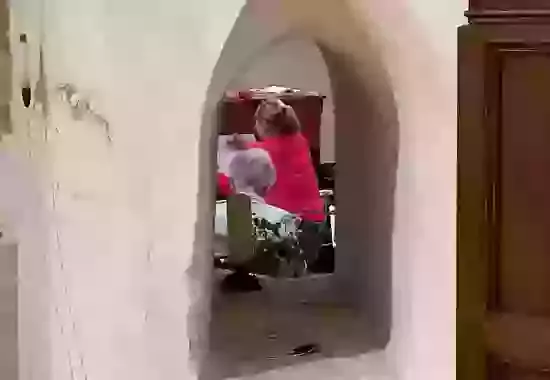
A squint, or narrow opening in the wall, allowed the Lord of the Manor to see the high altar from his private chapel. Nearby are the remains of the rood-loft steps and a memorial to Mary Spencer (1774).
(8) The Squint
A squint, or narrow opening in the wall, allowed the Lord of the Manor to see the high altar from his private chapel. Nearby are the remains of the rood-loft steps and a memorial to Mary Spencer (1774).
-
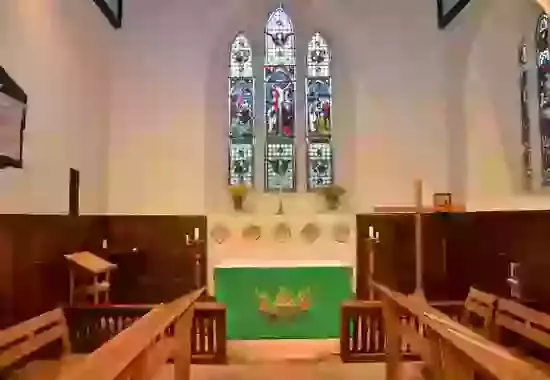
(9) The Chancel
The chancel walls and windows date from the early 13th century, while most furnishings are Victorian or modern.
Notable features include ledger stones relocated from the nave, memorials to the Olliver family, an aumbry, and a carved figure of Christ by Rev. Stansfield.
(9) The Chancel
The chancel walls and windows date from the early 13th century, while most furnishings are Victorian or modern.
Notable features include ledger stones relocated from the nave, memorials to the Olliver family, an aumbry, and a carved figure of Christ by Rev. Stansfield.
-
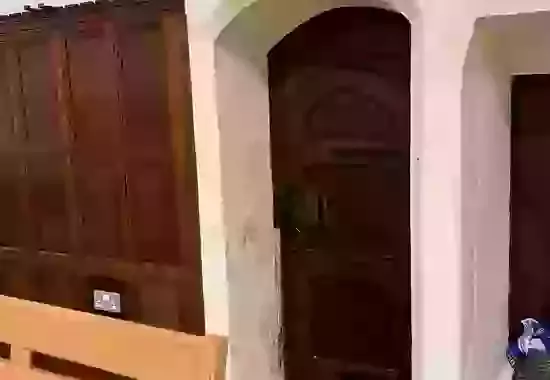
(10) Priest’s Door, Low-Side Window, & Mass Dial
The Priest’s Door dates from about 1230, while the low-side window was added later.
Outside the door is a rare mass dial, an early sundial used to mark service times. It is now visible from the vestry.
(10) Priest’s Door, Low-Side Window, & Mass Dial
The Priest’s Door dates from about 1230, while the low-side window was added later.
Outside the door is a rare mass dial, an early sundial used to mark service times. It is now visible from the vestry.
-
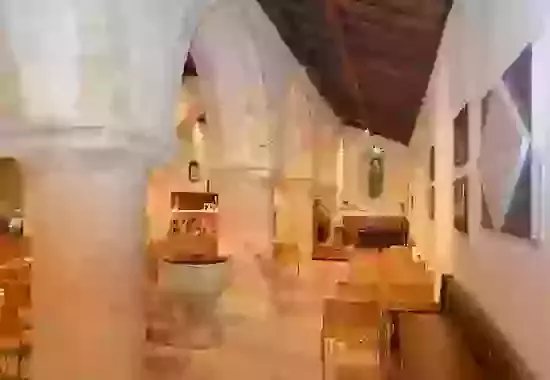
(11) The South Aisle
The south aisle contains the organ, vestries built in 1958, a memorial to T. A. Healey (choirmaster for 50 years), and a beautiful stained-glass window of St Elizabeth of Hungary in the modern toilet area. The original, smaller organ was once situated against the west wall of the North Transept. It was in this location when Sir Hubert Parry accompanied Dame Nellie Melba during a concert in the church in the early 1900s. In 1935, the current organ console was installed at the northwest end of the Nave, and the choir then occupied the rear pews. There was also once a gallery, used by children, located in the current position of the organ pipes.
The 13th-century font, now located in the South Aisle has above it a unique gilded dove representing the Holy Spirit, carved by Rev. Stansfield. Prior to the most recent re-ordering, the font stood by the North entrance to the church. Traditionally, the font is placed near the entrance to remind us that Baptism is the gateway to the Christian life, and that all who enter the church are welcomed into the family of God.
At the west end of the South Aisle once stood an altar used for evening services during the Second World War.
(11) The South Aisle
The south aisle contains the organ, vestries built in 1958, a memorial to T. A. Healey (choirmaster for 50 years), and a beautiful stained-glass window of St Elizabeth of Hungary in the modern toilet area. The original, smaller organ was once situated against the west wall of the North Transept. It was in this location when Sir Hubert Parry accompanied Dame Nellie Melba during a concert in the church in the early 1900s. In 1935, the current organ console was installed at the northwest end of the Nave, and the choir then occupied the rear pews. There was also once a gallery, used by children, located in the current position of the organ pipes.
The 13th-century font, now located in the South Aisle has above it a unique gilded dove representing the Holy Spirit, carved by Rev. Stansfield. Prior to the most recent re-ordering, the font stood by the North entrance to the church. Traditionally, the font is placed near the entrance to remind us that Baptism is the gateway to the Christian life, and that all who enter the church are welcomed into the family of God.
At the west end of the South Aisle once stood an altar used for evening services during the Second World War.
-
The Changing Face of the Church
Over the years, as reflected in its architecture, the church has undergone many transformations, including changes to its internal decoration. During the most recent re-ordering, the Victorian pews, the pulpit, the eagle lectern, and other furnishings were removed. One of the original pews may still be seen in the South Aisle. This invites us to reflect on what has been lost over the years—and how each generation has left its own mark on the life of the church.
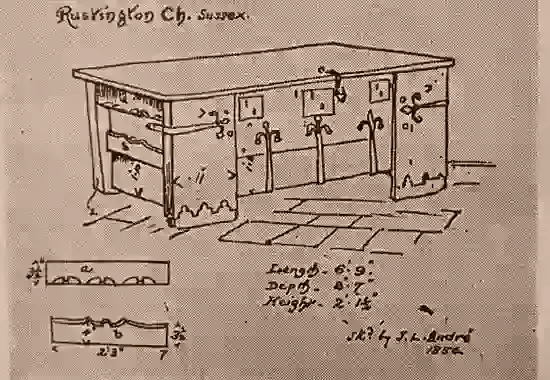
The church chest disappeared during the restoration of the 1850s, along with the Poor’s Box, which stood on a turned pedestal dated 1636. It is possible that the church chest may still survive, as the sale of valuable church furnishings to museums or private collectors was not uncommon at that time.
The Changing Face of the Church
Over the years, as reflected in its architecture, the church has undergone many transformations, including changes to its internal decoration. During the most recent re-ordering, the Victorian pews, the pulpit, the eagle lectern, and other furnishings were removed. One of the original pews may still be seen in the South Aisle. This invites us to reflect on what has been lost over the years—and how each generation has left its own mark on the life of the church.
The church chest disappeared during the restoration of the 1850s, along with the Poor’s Box, which stood on a turned pedestal dated 1636. It is possible that the church chest may still survive, as the sale of valuable church furnishings to museums or private collectors was not uncommon at that time.
-
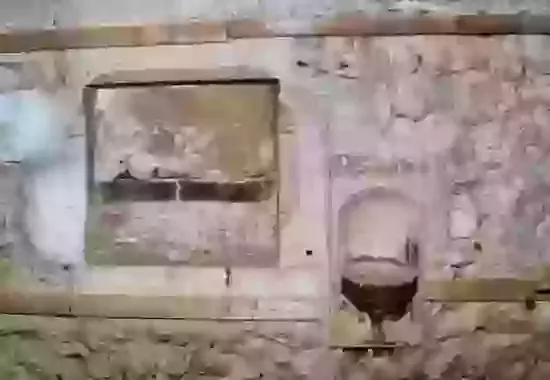
Original Piscina Revealed
In 1985, when dry rot was discovered in the chancel, investigations revealed the original 13th-century piscina. The piscina had suffered damage during the Victorian period, when panelling was installed over it.
Original Piscina Revealed
In 1985, when dry rot was discovered in the chancel, investigations revealed the original 13th-century piscina. The piscina had suffered damage during the Victorian period, when panelling was installed over it.
-
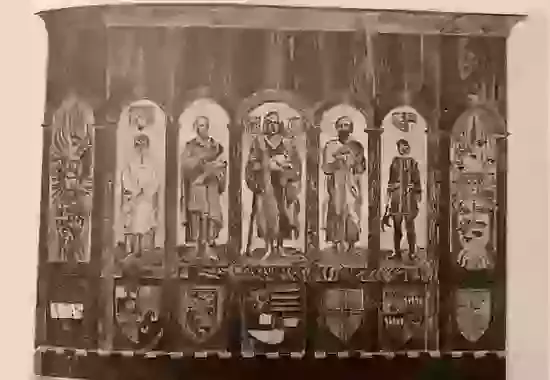
Organ Screen
An organ screen was presented by John Edward Parry (churchwarden 1929-1947) in memory of his wife Constance Hasebridge Parry, and it was dedicated by The VeryReverend A S Duncan-Jones B.D. Dean of Chichester on 23rd April 1950.
The central panel depicts Our Saviour as an Eastern shepherd, with the emblems of the Passion above. To the left of the central figure is a painting of St Peter, whose features are modelled on the Reverend Stansfield. The adjoining panel shows a chorister of Chichester Cathedral, with the Arms of the Chapter above, while the final panel on the left portrays an Angel of the Apocalypse.
To the right of the central figure, the first painting depicts St Paul, whose features are those of Sir Hubert Parry. The next panel shows a chorister of the Chapels Royal, with the Royal Arms above, and the final painting is again of an Angel of the Apocalypse.
Organ Screen
An organ screen was presented by John Edward Parry (churchwarden 1929-1947) in memory of his wife Constance Hasebridge Parry, and it was dedicated by The VeryReverend A S Duncan-Jones B.D. Dean of Chichester on 23rd April 1950.
The central panel depicts Our Saviour as an Eastern shepherd, with the emblems of the Passion above. To the left of the central figure is a painting of St Peter, whose features are modelled on the Reverend Stansfield. The adjoining panel shows a chorister of Chichester Cathedral, with the Arms of the Chapter above, while the final panel on the left portrays an Angel of the Apocalypse.
To the right of the central figure, the first painting depicts St Paul, whose features are those of Sir Hubert Parry. The next panel shows a chorister of the Chapels Royal, with the Royal Arms above, and the final painting is again of an Angel of the Apocalypse.
-
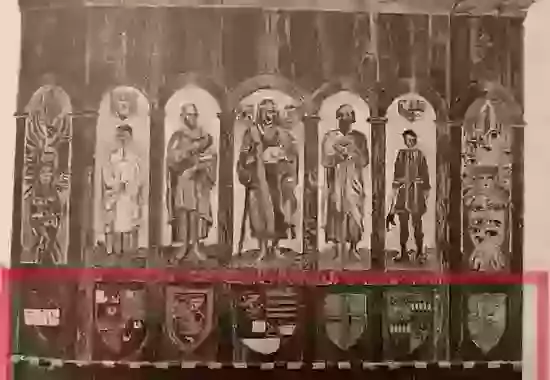
Shields
Beneath the paintings are a series of shields, which, from left to right, represent:
- Covert, Lord of the Manor in 1535;
- Cooke, Thomas Cooke, a landowner in 1520 who is buried in the chapel;
- De Bohun, Savaric de Bohun, granted the Lordship of Midhurst with the outlying Manors of Ford and Rustington in 1220 by the Earl of Arundel;
- The centre shield bears the Arms of Henry Fitzalan, 22nd Earl of Arundel (1511–1580), the last of his line and the first lay impropriator or Rector after the suppression of the Monasteries;
- Roger Montgommery, first Earl of Arundel, who led the centre at the Battle of Hastings and was also Earl of Chichester and Shrewsbury;
- Gratwicke, Thomas Gratwicke of Ham, Lord of the Manor of Rustington in the latter part of the 17th century;
- Olliver, the last of the long line of lay impropriators dating back to 1354. The vested interest in the Great Tithes belonging to the lay rectors was abolished by the Tithes Act of 1936.
Shields
Beneath the paintings are a series of shields, which, from left to right, represent:
- Covert, Lord of the Manor in 1535;
- Cooke, Thomas Cooke, a landowner in 1520 who is buried in the chapel;
- De Bohun, Savaric de Bohun, granted the Lordship of Midhurst with the outlying Manors of Ford and Rustington in 1220 by the Earl of Arundel;
- The centre shield bears the Arms of Henry Fitzalan, 22nd Earl of Arundel (1511–1580), the last of his line and the first lay impropriator or Rector after the suppression of the Monasteries;
- Roger Montgommery, first Earl of Arundel, who led the centre at the Battle of Hastings and was also Earl of Chichester and Shrewsbury;
- Gratwicke, Thomas Gratwicke of Ham, Lord of the Manor of Rustington in the latter part of the 17th century;
- Olliver, the last of the long line of lay impropriators dating back to 1354. The vested interest in the Great Tithes belonging to the lay rectors was abolished by the Tithes Act of 1936.
-
Today
Rustington Museum now holds the original organ screen. However, this painting of the screen was created by Edith E.
Johnson, who lived at The Grangeway near the church. She also painted the Arms of Elizabeth I and Elizabeth II, which once stood on either side of the West wall of the Nave.
Visitors are encouraged to take their time exploring the many memorials and stained-glass windows throughout the church, each reflecting the rich and layered history of St Peter and St Paul, Rustington.
Today
Rustington Museum now holds the original organ screen. However, this painting of the screen was created by Edith E.
Johnson, who lived at The Grangeway near the church. She also painted the Arms of Elizabeth I and Elizabeth II, which once stood on either side of the West wall of the Nave.
Visitors are encouraged to take their time exploring the many memorials and stained-glass windows throughout the church, each reflecting the rich and layered history of St Peter and St Paul, Rustington.